
Things to Do in Okinawa: Beyond the Beach Clichés
Shuri Castle, Kokusai-dori, Churaumi Aquarium, and Okinawa's best diving and snorkeling — what's actually worth prioritizing on the main island.

Introduction
Okinawa's must-do list runs shorter than Kyoto's or Tokyo's, but it spans a wider range of experience — Ryukyu history, a genuinely distinct urban market street, one of the world's largest aquariums, and some of Japan's best accessible snorkeling and diving, all reachable from Naha within a day's drive.
Shuri Castle and the Ryukyu Kingdom
Shuri Castle Park, the former royal capital, is the obvious starting point for understanding Okinawa rather than just visiting it. It's part of the UNESCO-listed "Gusuku Sites and Related Properties of the Kingdom of Ryukyu" — worth understanding what that actually covers: it's the castle site and stone foundations, not the wooden superstructures rebuilt on top of them, which is why the October 2019 fire that destroyed the main hall (Seiden) and several other structures didn't affect the UNESCO status even as it devastated the visitor experience. As of mid-2026, reconstruction using traditional Ryukyu lacquer, woodwork, and tile techniques is on schedule, with the rebuilt Seiden's exterior complete and a public reopening targeted for autumn 2026 — no exact date had been formally announced as of this writing, so check the official park site before visiting. The free zone (Shurei Gate, the sacred Sonohyan-utaki stone gate) is worth a stop even without paying the ¥400 adult admission for the paid inner area beyond Hoshinmon Gate.
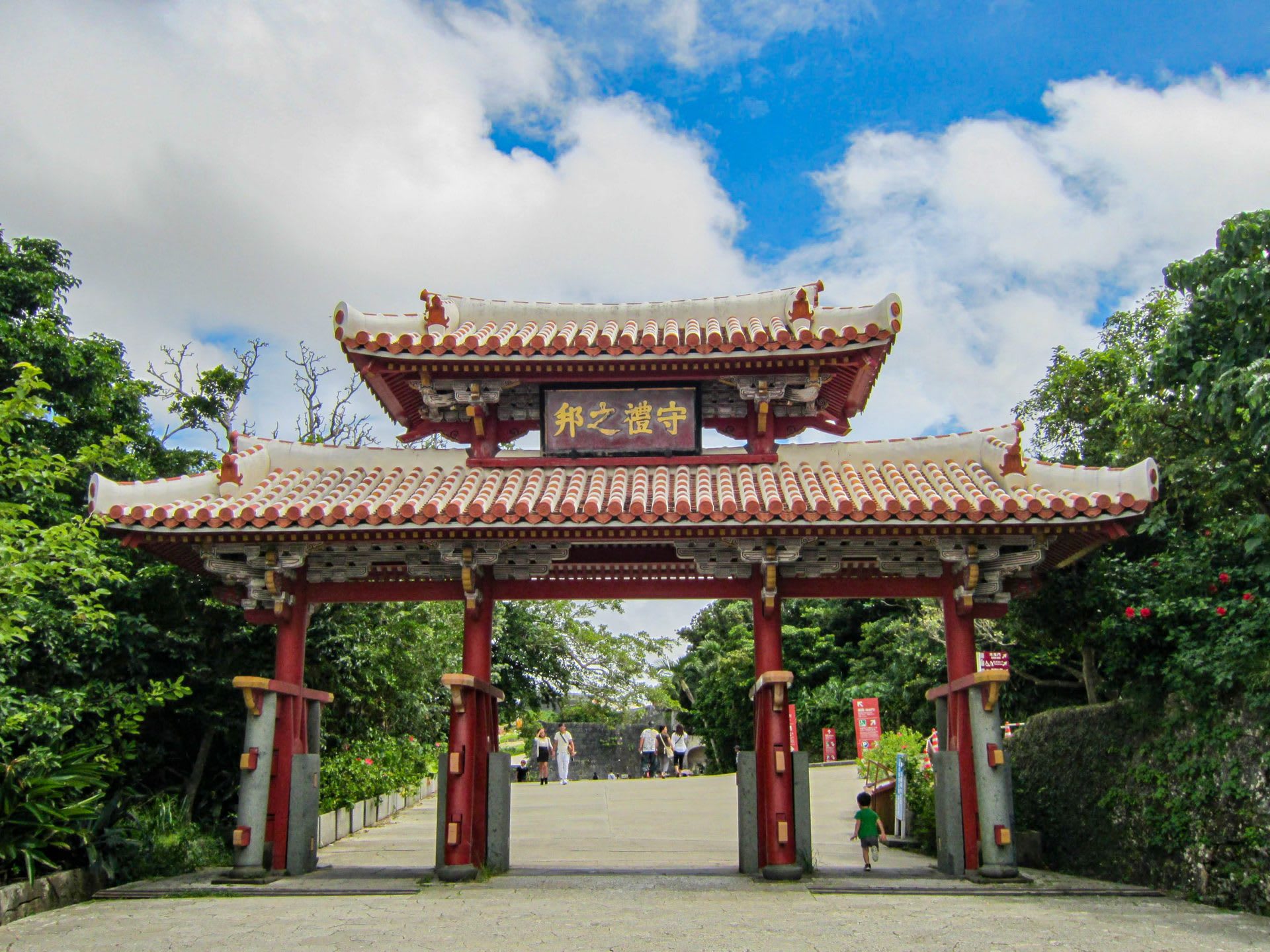
Photo: Naokijp / Wikimedia Commons (CC BY-SA 4.0)
Kokusai-dori, Tsuboya, and Naha's Street Life
Kokusai-dori, Naha's 1.6 km main strip, earned the nickname "Miracle Mile" for how fast it rebuilt after the Pacific War; today it's dense with shops, izakaya, and souvenir stores and functions as most visitors' introduction to the city. It's touristy and knows it — treat it as an orientation walk and a meal stop, not the trip's highlight. Two detours pay off more: the First Makishi Public Market just off Kokusai-dori, where the ground floor sells fresh seafood and produce and upstairs eateries will cook what you buy for a small fee; and Tsuboya Yachimun-dori, a 400-meter pottery street tracing back to a Ryukyu Kingdom-era kiln district established in 1682, still lined with working pottery studios.
Churaumi Aquarium and the North
Okinawa Churaumi Aquarium, inside Ocean Expo Park in Motobu, is the main draw in the island's north and one of the largest aquariums in the world, built around a huge tank housing whale sharks and manta rays. It's roughly a 90-minute drive from Naha, making it a full-day commitment — pair it with a stay on the Nago or Onna resort coast rather than a rushed day trip from central Naha if the schedule allows. Hours extend later during peak summer weeks and shorten off-season, so confirm before visiting.
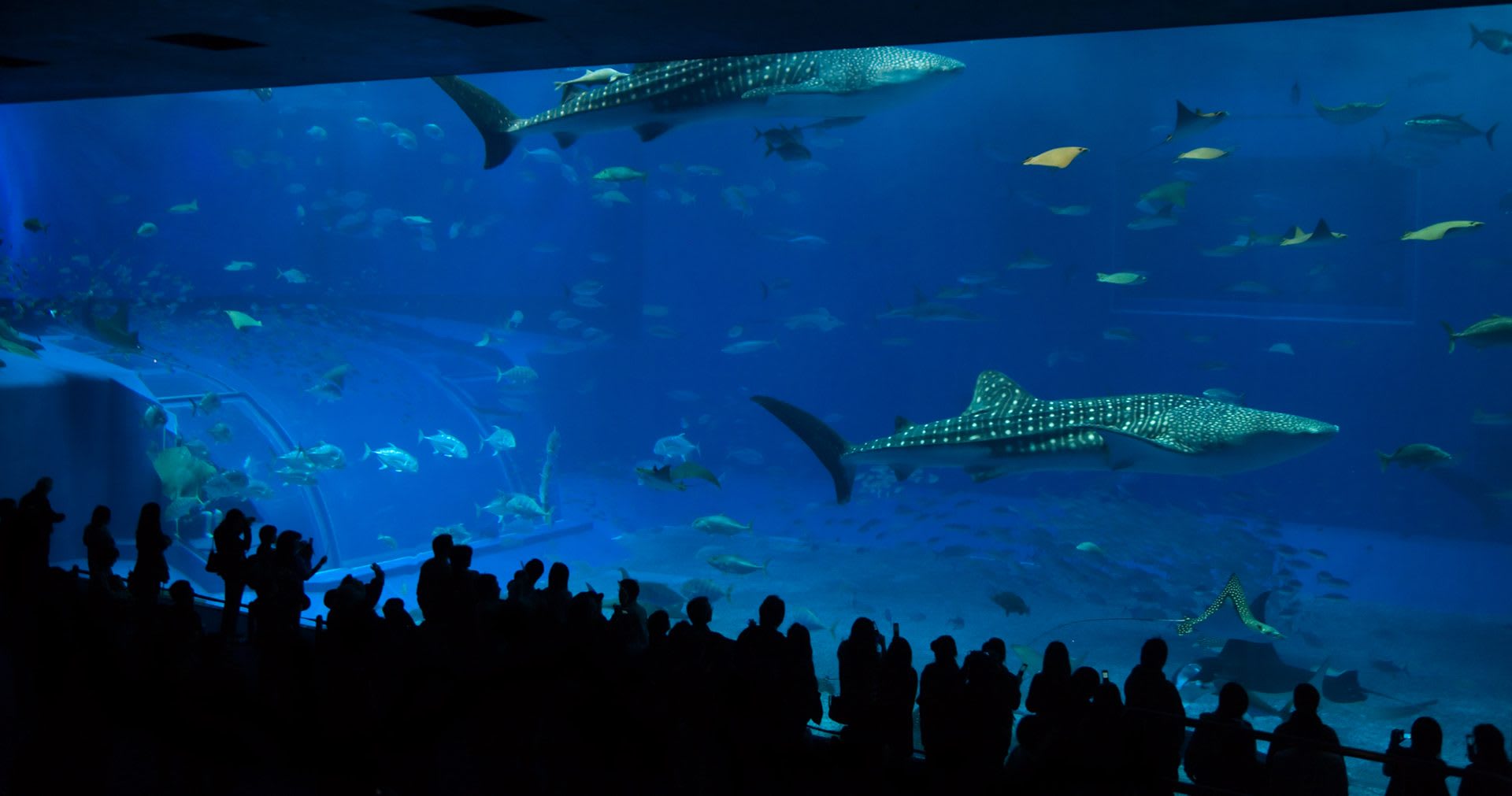
Photo: Megapixie / Wikimedia Commons (Public domain)
Diving and Snorkeling
Cape Maeda's Blue Cave in Onna Village is Okinawa's best-known snorkeling and diving spot — a partially submerged sea cave where sunlight filtering through the water creates a blue glow — and its fame is also its main drawback: it gets crowded, and an early guided tour is the difference between a good experience and a queue in the water. For clearer water, the Kerama Islands, a short ferry from Naha, are consistently rated above the main island's coastline by dive operators, with visibility regularly exceeding 20–30 meters. Both are legitimate choices: Blue Cave wins on convenience, Kerama wins on water quality.
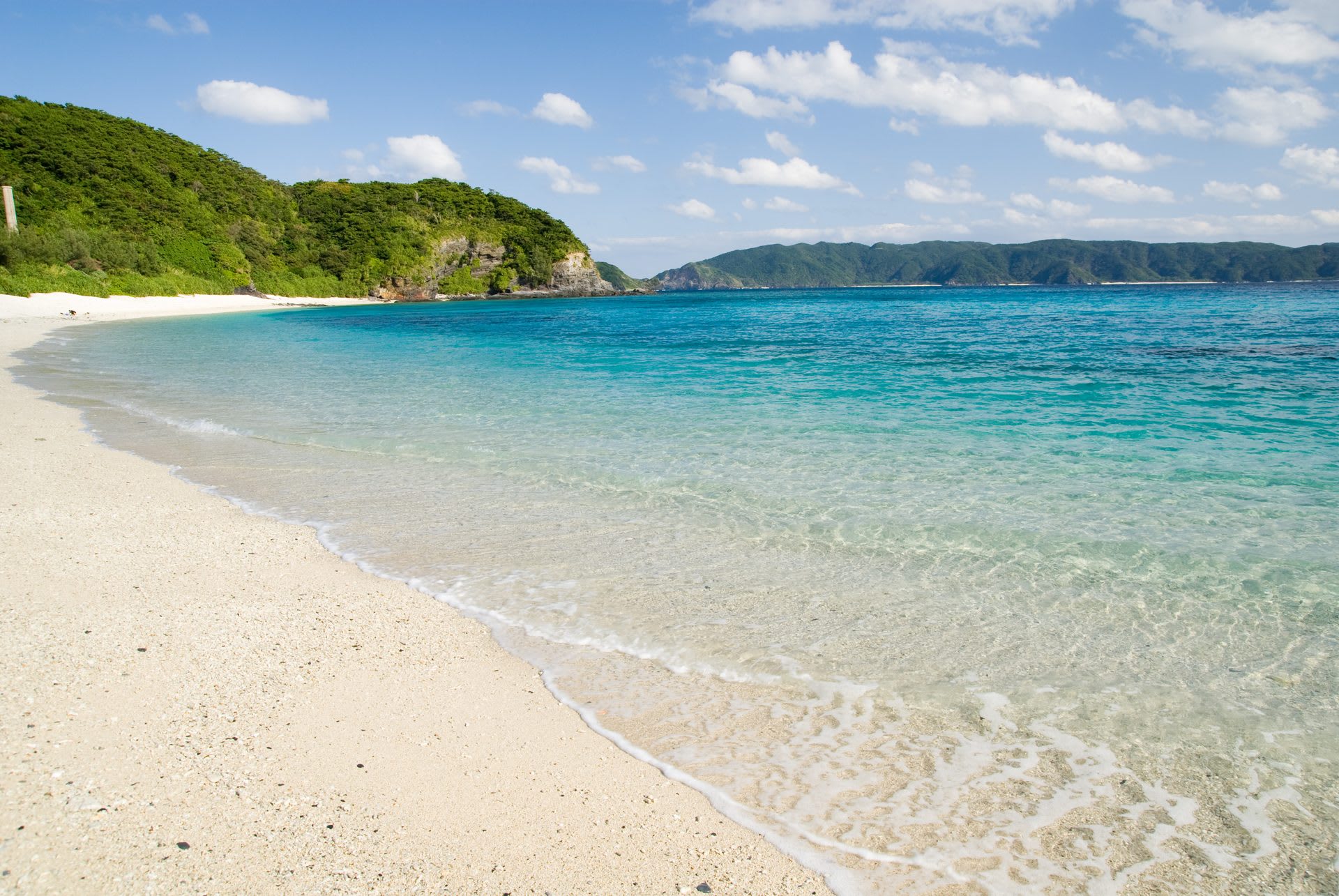
Photo: Hashi photo / Wikimedia Commons (CC BY 3.0)


